
When the theme for this year’s WMD was released, I literally sat back and pondered…
Would I have described myself in chronic pain during my most difficult times?
What does chronic pain mean to me?
I thought I would share my thoughts and then give you some insight from others…
When I considered the theme, I directly associated chronic pain with physical pain, and it was not how I would have described my toughest menopause months and years. However, the thought swiftly moved into a different area of my work, which I will come back to.
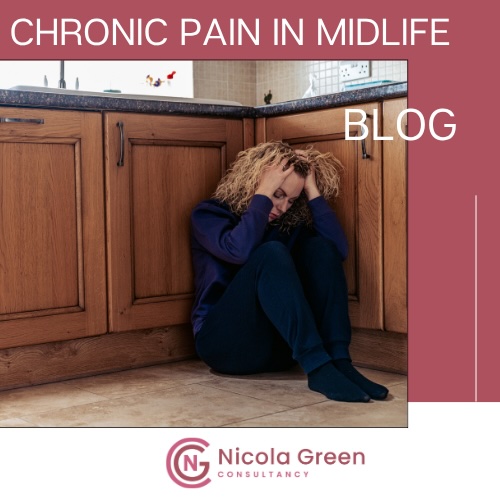
The chronic pain I experienced was emotional and an amalgamation of overwhelming anxiety, feeling lost, and numb of all emotion. Can you call it pain when you cannot feel it? I call it pain because I was in pain for not being the person I used to be/wanted to be.
I hope the image within this blog depicts those feelings and is a constant reminder to me to continue to work on myself and never get back there again.
Breast cancer, menopause, and chronic pain
As mentioned previously, my mindset switched to others and the first vision for me of chronic pain in midlife was some of the ladies I have the privilege of supporting at my local breast cancer group.
I asked one of the ladies how she would describe her own chronic pain in midlife from breast cancer and menopause and this is what she said:
“One day I was in what I would call standard perimenopause; mood swings, aches, pains etc and the very next day, the day after starting my breast cancer treatment, I was in chronic pain. Within 24 hours, everything changed.
It felt that overnight any oestrogen I had left, had been stripped from my body. These cancer drugs were to protect my future self but had left me in immense pain to be my current self.
I remember trying to get out of bed in the morning and the act of simply putting my feet on the floor can only be described as feeling like I had tennis elbow through my whole body.
Whilst I was aware of the presence of my perimenopausal aches and pains, my life was now in another level of stiffness, uncomfortableness, and chronic pain.
I used to be physically strong. Now I am working hard to learn to live with the new version of me.”
What are others saying?
I have asked various women of their views of this year’s theme.
Many expressed their feelings of chronic pain in midlife because of joint pain, damaged feet, knees, and hips. Again, always with an overriding question… is this menopause related or is it wear and tear? It still equates to the same thing… chronic pain in midlife.
Others expressed their personal experience was not physical pain but emotional pain, whilst going through menopause and trying to juggle everything else life throws at them. It should never be underestimated (and I really believe it is) what women are juggling during midlife. They are literally superwomen without realising it or being able to feel it.
Description of chronic pain
Chronic pain is pain that lasts longer than 3 months in one or more parts of the body. It can cause emotional distress and can make daily tasks more difficult.
Chronic pain can be a diagnosed health condition on its own. It can also sometimes be a symptom of another health condition.
NHS inform – www.nhsinform.scot
Quote from International Menopause Society
“The 2026 International Menopause Society White Paper reviews current knowledge about chronic pain at midlife, focusing on conditions such as fibromyalgia, migraine and chronic pelvic pain.
These conditions frequently overlap and may share underlying mechanisms involving changes in the nervous system, immune system, hormones, musculoskeletal health and pain processing.
Menopausal symptoms such as sleep disturbance, fatigue, mood changes and hot flushes may further affect the experience of pain.
Gender stereotypes and inequalities in healthcare may contribute to women’s pain being insufficiently recognized and addressed.
Cultural factors may also shape the experience and management of pain.
A better understanding of these factors is therefore important to improve equity in pain care.
The 2026 White Paper highlights the need for personalized and multidisciplinary care that considers the different factors contributing to pain in each woman. Lifestyle interventions, hormonal and non-hormonal treatments, and appropriate pain-management strategies may all have a role, depending on individual
circumstances.
Further research is needed to better understand how menopause and chronic pain interact, identify women at greater risk and develop effective treatments. Recognizing chronic pain as an important component of midlife health may help improve quality of life, clinical care and healthy aging in women.”
As always, my work is to guide, support and provide understanding to all women through midlife. Sometimes, it is about challenging their thinking, asking them to consider a different perspective and always working with them to bring them up their own pecking order. Whilst doing this, I appreciate the pain many are experiencing. I sadly cannot take that away, but I can do my absolute best to inspire and re-ignite something deep down inside of each and every one of them and that continues to be my passion and my mission.
